Neck Intelligence · A somatic fascia journey
Your neck is not tight. Your nervous system is bracing.
A guided somatic program for neck and shoulder tension that keeps coming back. Learn to feel your neck from the inside and let it soften without force: short audio and video practices of slow, eyes-closed movement, a few minutes a day.
Opens November 1 · $97 launch price · Lifetime access · 14-day money-back guarantee
What you’ll be able to do
Six skills for a neck that can finally rest.
Neck Intelligence is not another routine to follow. You learn to feel your neck from the inside, and what you learn stays with you.
Locate the tension in your neck, jaw and shoulders, and notice it early, before it builds up.
Feel the weight of your head resting on your spine, instead of being held up all day.
Soften the back of your neck with slow, small movements, instead of stretching or pressing harder.
Notice how your jaw and neck brace together, and let both soften at the same time.
Let your breath drop lower, and feel your shoulders follow it down.
Use the Screen-Day Reset anywhere: at your desk, on a train, at bedtime.
A new understanding
What if your body isn’t resisting you? What if it’s protecting you?
We have learned to see tension as a mechanical problem: a muscle too short, a joint to crack, a tissue to stretch harder. So we push, again and again. The relief lasts a few hours. Then the holding returns.
Your neck does not tighten at random. It responds to what your nervous system perceives: stress, screens, long days, old habits of holding on. Your body is not broken. It learned to protect you, and it is still doing its job.
So the real question is not how to force it open. It is how to give it permission to let go.
“The body does not release through force. It releases through safety.”
Why it keeps coming back
You’ve tried the usual things. And still, it comes back.
Stretching
Pulls against a protective response. A bracing system often guards even more.
Massage
Deeply relieving, for a while. If the pattern underneath doesn’t change, the tension returns.
Tools & devices
Foam rollers, massage guns, neck stretchers. The relief is real. The change rarely lasts.
“Good posture”
Holding yourself straight all day is one more way of holding. Your neck needs rest, not another effort.
None of these are wrong. They are simply incomplete: they work on the tissue, not on the system that tells it to hold.
The missing piece
Your nervous system sets the tone. Your fascia follows.
Every moment, your nervous system asks one silent question: am I safe? Fascia is rich in sensory nerve endings, so it is closely linked to that answer. When the answer stays “not quite”, the neck and shoulders stay on guard, whatever you do to them.
Neck Intelligence works on step one. Through slow, guided sensory movement, it speaks to your nervous system first, so your neck can let go from the inside.
A concrete experience
What a 6-minute practice looks like
No equipment, no mat required. A quiet place, headphones and six minutes.
The voice invites you to notice your body as it is. No goal, nothing to fix. You feel your weight and where the tension lives.
A tiny rotation of the head, so slow it feels like an intention. Your system receives a new message: there is no hurry here.
A sigh, shoulders that drop. Many people notice warmth, a deeper breath or a softening in the neck.
You turn your head slowly and notice the difference. Often it simply moves more easily.
Inside the program
Everything your neck needs to finally let go.
01 · Audio · 2 practices · 6–7 min
Sensory movement for the neck
Two guided practices of slow, precise sensory movement. They gently undo the bracing pattern and bring back easy, fluid movement to your neck and upper back.
02 · Audio & video · 13 lessons · 3–6 min
Understand your neck from the inside
- Why does the pain spread everywhere?
- What is squeezing my head?
- Why is my jaw so tight?
- Who gets tired holding up my head?
- How to melt the “glue”
- Easing the back of the neck · Lightening the shoulders · and more
03 · PDF guides
Practice guides
Clear illustrated guides to the fascia of the head and neck, and a simple daily routine to keep between sessions.
Bonus · Audio & PDF
The Screen-Day Reset
Three micro-practices of one to two minutes you can do at your desk, in a meeting or on a train: soften your eyes, let your head find its balance, let your breath drop below the shoulders. For the days when you cannot lie down.
What can change
Not only what you feel. What you understand.
- A breath that drops lower, below the shoulders
- A neck that feels lighter and turns more easily
- Knowing why your neck holds, and what helps it let go
- A 5-minute ritual you actually look forward to
- A body you feel safer inside
Everyone is different, and results vary from person to person.
Who it is for
Anyone whose neck keeps holding
Desk work, screens, stress, long days. You have tried a lot. You are ready for something gentler.
Yoga, Pilates & bodywork professionals
Understand why your clients’ tension returns, and add a somatic fascia dimension to your classes and sessions.
Not for you if you are looking for a workout or a stretching routine. And if your pain is severe, recent, or comes with numbness, weakness, dizziness or headaches, please see a doctor first.

Your guide
Nicolas Luc Levé
Somatic fascia educator · Founder of Fascia Somatic · Paris
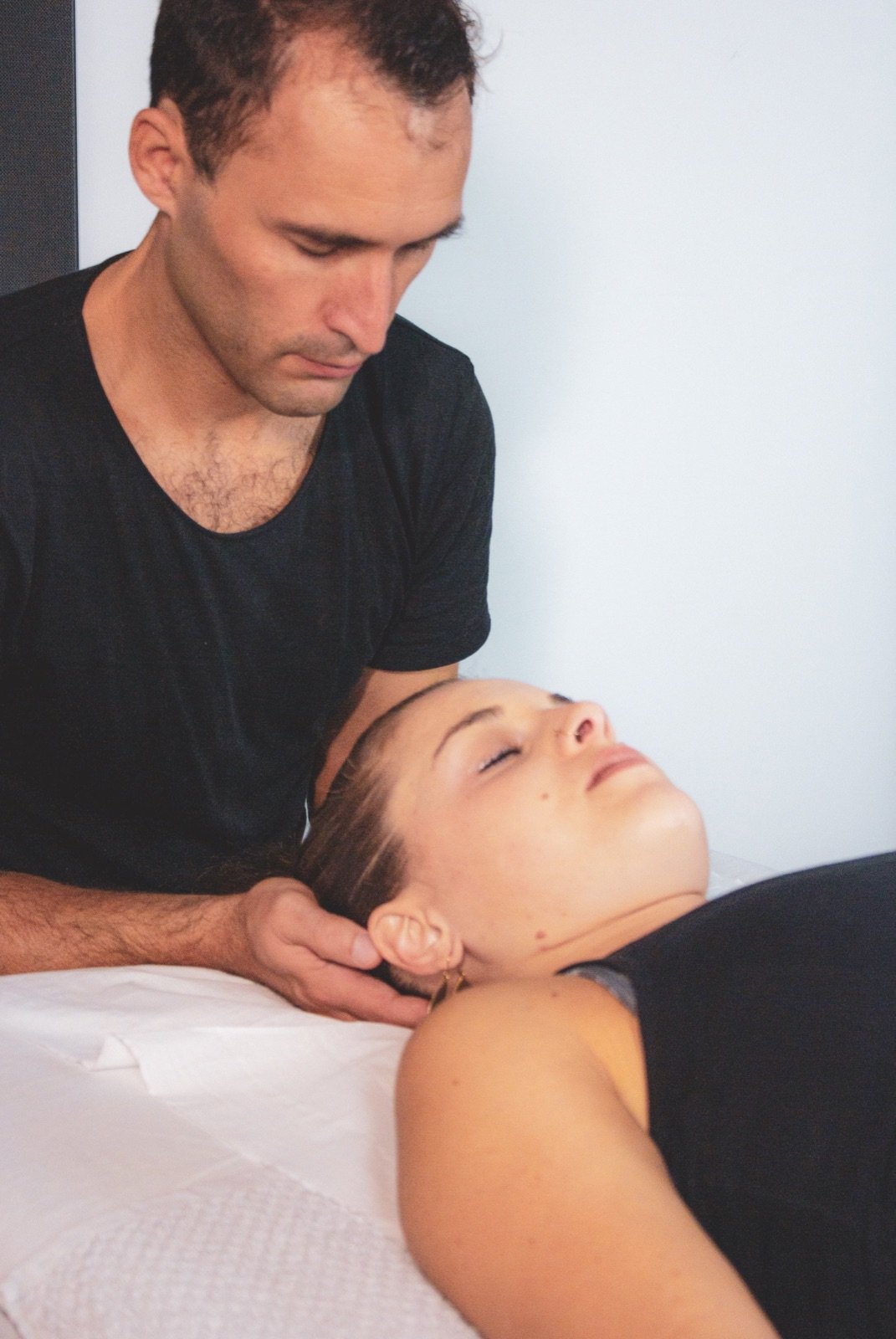
I did not learn fascia from a book. I learned it under my hands. Since 2013 I have trained in fascia work, traditional Thai massage (300 hours, certified to teach, Chiang Mai) and Ashtanga yoga (Yoga Alliance), and worked one-to-one in my studio in Paris, rated 5.0 by 110 clients for in-person sessions.
What I saw every day: bodies do not let go when you push them. They let go when they feel safe. Neck Intelligence is the bridge between that hands-on experience and your daily life: short practices you can do at home, designed to be felt.
“Listen to your fascia, meet yourself.”
One payment · Yours for life
Neck Intelligence opens on November 1.
One payment. No subscription, no renewal. Lifetime access, including future updates.
- 2 guided sensory movement practices (audio, 6–7 min)
- 13 short lessons on your neck (audio & video, 3–6 min)
- Illustrated PDF practice guides
- Bonus: The Screen-Day Reset (3 desk micro-practices)
- Instant access on phone, tablet and computer
Launch price · one-time payment in USD · opens November 1
Join the launch list: you receive the free 7-minute practice and the link to join at $97 as soon as doors open.
14-day money-back guarantee. Practise for two weeks. If you don’t feel a difference, write to us and we refund you in full. No questions asked.
Questions
Do I need somatic experience?
No. Neck Intelligence works as a first somatic experience and as a deepening for practitioners. The voice guides you completely. Your attention is the only requirement.
How much time does it take?
Each practice and lesson lasts 3 to 7 minutes. Most people do one a day. You go at your own pace.
What do I need?
A quiet space, somewhere comfortable to lie down or sit, and headphones. Nothing else.
Is there science behind it?
The practices use slow movement and guided attention to help you notice sensations from inside your body. Researchers call these abilities interoception and proprioception, and they are studied as part of how the nervous system regulates tension and stress. Neck Intelligence is an educational program, not a medical treatment.
Is this a medical treatment?
No. Neck Intelligence is somatic education and guided sensory movement. It does not diagnose or treat any condition. If you have a diagnosed condition, ask your healthcare provider before starting. Many people find it a gentle complement to the care they already receive.
What if it isn’t right for me?
You have 14 days to try it. If you practise and don’t feel a difference, write to us: full refund, no questions asked.
Why is a French teacher teaching in English?
Nicolas works in Paris and teaches workshops around the world. Neck Intelligence brings his practices to English speakers who cannot meet him in person. The English audio is voiced with AI from Nicolas’s own voice.
Your nervous system is ready to soften.
Not stretched. Not forced. Guided into safety, so your neck can finally let go.
Opens November 1 · $97 launch price · Lifetime access · 14-day money-back guarantee